As a parent, your child’s well-being is your top priority. From their first breath, you watch for every sign of health and happiness. Sometimes, however, babies and children experience discomfort, imbalances, or developmental challenges that leave parents seeking gentle, non-invasive solutions. This is where osteopathy comes in. A holistic, hands-on approach, osteopathy can be remarkably effective for our little ones.
What is Pediatric Osteopathy?
Pediatric osteopathy is a specialized branch of osteopathic medicine focused on the unique anatomy and physiology of infants and children. Using extremely gentle, subtle manual techniques, a qualified osteopath assesses and treats strains or tensions in the body’s structures—including bones, muscles, fascia, and the cranial system.
The core principle is that the body has an innate ability to heal itself. By ensuring optimal alignment and fluid movement, osteopathy supports this self-healing capacity, promoting better sleep, digestion, nervous system regulation, and overall development.
Why Consider Osteopathy for Your Infant or Child?
The birth process, even during routine deliveries, can place significant stress on a newborn’s delicate body. This can lead to mild misalignments or tensions that may contribute to common issues. For older children, falls, growth spurts, or illnesses can also create imbalances.
Osteopathy is not about “cracking” bones. Instead, it uses gentle pressure, stretching, and mobilization to release restrictions, improve circulation, and encourage the nervous system to relax. It’s a safe and generally very soothing experience for the child.
Common Indications for Infant Osteopathy
- Post-Birth Recovery: To address potential strains from the birthing process, including forceps or vacuum-assisted deliveries, or caesarean sections.
- Plagiocephaly (Flat Head Syndrome): Gentle cranial techniques can help improve skull shape when combined with repositioning strategies.
- Torticollis (Wry Neck): Releasing tight neck muscles to restore full, pain-free range of motion.
- Digestive Discomfort: Colic, excessive gas, reflux, and constipation can often be linked to tensions in the diaphragm, abdomen, or vagus nerve pathway.
- Breastfeeding Difficulties: Difficulty latching can sometimes stem from tension in the baby’s jaw, neck, or cranial bones.
- Sleep Disturbances: Helping to calm the nervous system can promote more restful sleep.
- Recurrent Ear Infections: Improving drainage and function of the Eustachian tubes through subtle cranial and facial techniques.
- General Fussiness and Soothing: For babies who seem unsettled and difficult to console for no apparent reason.
Common Indications for Older Children
- Recurrent Headaches or Sinus Issues
- Postural Problems (e.g., from heavy school bags)
- Recovery from Injuries (sports injuries, falls)
- Growing Pains
- Asthma and Respiratory Allergies
- Anxiety and Focus Issues (by supporting nervous system balance)
What to Expect During a Session at a Pune Osteopathy Clinic
- Detailed History: The osteopath will discuss your pregnancy, birth, your child’s health, and your specific concerns.
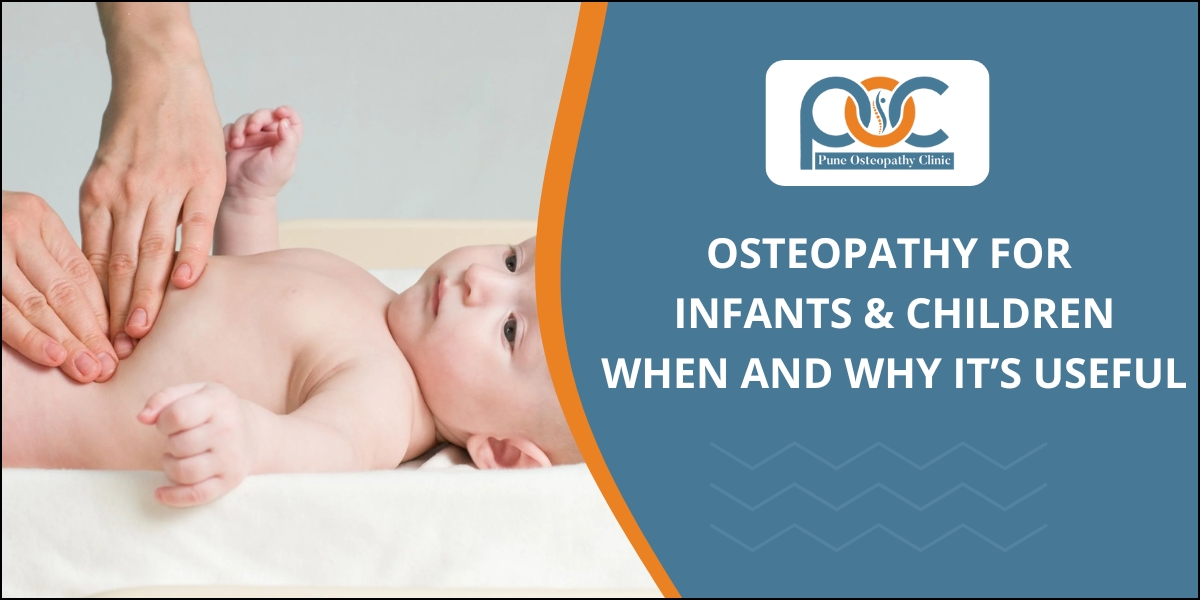
- Gentle Assessment: Your child will be assessed while lying on a treatment table or in your arms. The osteopath will feel for areas of tension, asymmetry, or restriction with very light touch.
- Treatment: Using age-appropriate techniques, the osteopath will apply gentle pressure, stroking, or holding to encourage release and balance. Babies often sleep or feed during treatment.
- Parental Guidance: You’ll be part of the process and may receive advice on positioning, gentle exercises, or stretches to support the treatment at home.
A course of treatment typically involves 2-4 sessions spaced a few weeks apart, depending on the individual need.
Osteopathy offers a compassionate, effective, and drug-free path to support your child’s health and development. By addressing the root causes of discomfort with a gentle touch, it can help your infant or child thrive. If you observe any of the signs mentioned, consulting a qualified pediatric osteopath could be a valuable step toward your child’s well-being.
FAQs on Osteopathy for Infants & Children
1: Is osteopathy safe for newborns?
Yes, when performed by a qualified pediatric osteopath, the techniques are extremely gentle, non-invasive, and considered very safe for newborns.
2: How soon after birth can a baby see an osteopath?
Babies can be assessed and treated within the first few weeks of life, especially if there were birth complications or immediate feeding issues.
3: Can osteopathy help with infant colic?
Yes, by releasing tensions in the diaphragm and abdomen that may affect digestion, osteopathy can often significantly reduce colic symptoms and calm a distressed baby.
4: How many osteopathy sessions will my baby need?
Most babies show improvement within 2 to 4 sessions. The osteopath will create a personalized plan based on your baby’s specific needs.